0x5c643c9d5c64…5c643c9a
Kraken Parent Payward to Acquire Lithuania's Saldo Bank in EU Push
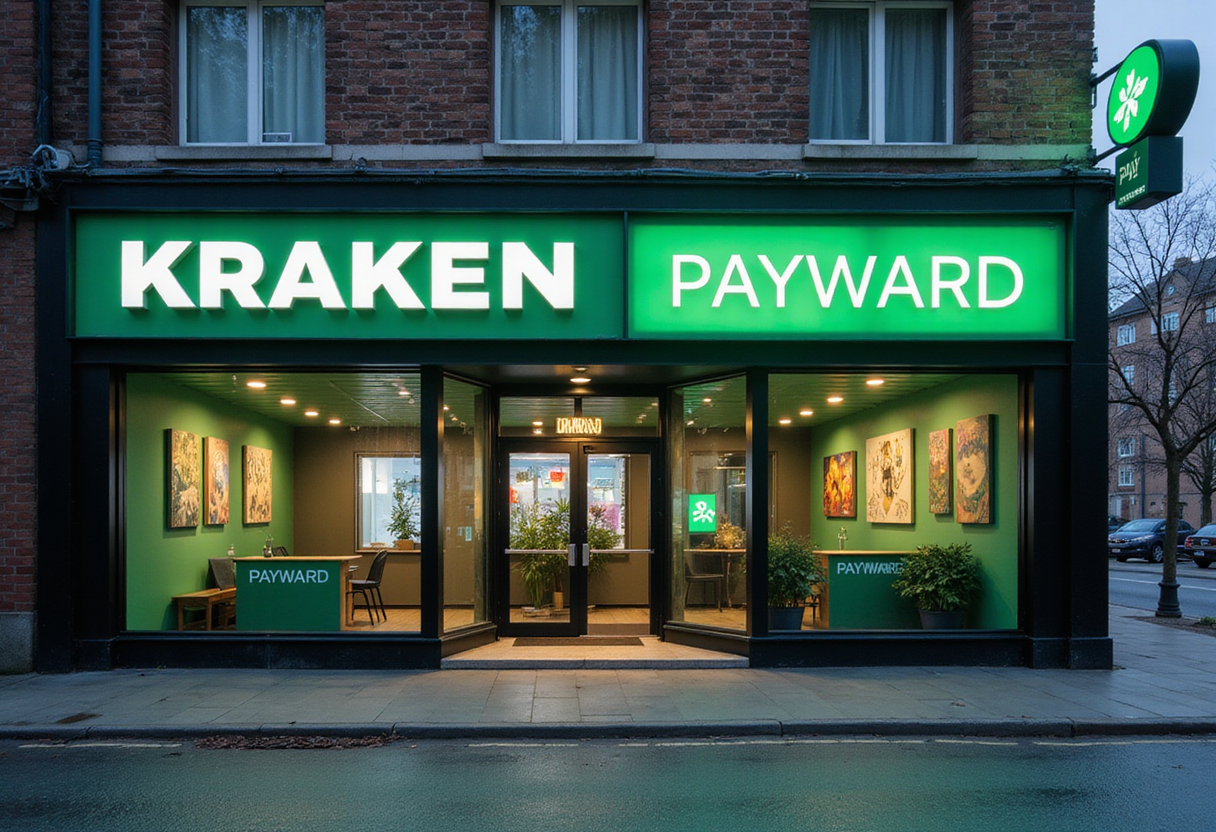
Payward, Kraken's parent, is buying Lithuania's Saldo Bank, becoming the first digital asset firm to acquire a European bank as it builds lending and card issuing.
Outputs
Payward is acquiring EU-licensed Saldo Bank of Lithuania for an undisclosed sum, with closing expected in 2027.
Payward is the first digital asset company to buy a bank in Europe, per the Financial Times.
The deal follows $550M for Bitnomial in April and $600M for Reap Technologies in May.
Payward applied for an OCC national trust company charter in May; the ICBA sued the OCC this month over crypto charters.
Kraken's IPO has slipped to Q2 2027 at the earliest.
Payward, the parent company of crypto exchange Kraken, is acquiring Saldo Bank, an EU-licensed lender based in Lithuania, in a deal the Financial Times reported on Wednesday. The purchase makes Payward the first digital asset company to buy a bank in Europe, according to the FT. The price was not disclosed.
Saldo Bank received its EU banking license in 2021 and currently offers consumer and business loans as well as term deposits. Payward plans to fold those capabilities into a broader expansion into lending and card issuing. The transaction remains subject to regulatory approvals and is expected to close in 2027.
Co-CEO Arjun Sethi framed the deal around customer demand for conventional banking services. "One of the biggest things that our customers have been asking us is 'I would like to get products and services and offerings similar to what I get with another bank,'" Sethi told the FT.
What does the acquisition change for Kraken customers?
The operational core of the deal is balance-sheet access. By owning a licensed EU bank rather than partnering with one, Payward gains direct authority to originate credit and take deposits under European prudential supervision. Sethi said the plan is to bring cash, crypto, tokenized stocks and credit together in a single system, so customers can borrow and lend against their assets without selling them.
For practitioners, that distinction matters. Borrowing against holdings rather than liquidating them changes tax treatment, collateral management and treasury workflows for both retail and institutional users. A chartered banking subsidiary also removes the dependency on third-party banking partners, a chronic friction point for crypto firms operating in Europe.
A parallel track in the United States
The Lithuanian acquisition runs alongside Payward's American regulatory push. The San Francisco-based company, founded in 2011, applied in May for a national trust company charter from the U.S. Office of the Comptroller of the Currency, the federal bank regulator. Coinbase and Ripple are among the crypto firms that have already received conditional approval for such charters, which allow holders to custody customer assets and provide transaction services but not to take deposits.
That route now faces legal challenge. This month, the Independent Community Bankers of America sued the OCC, arguing that granting such charters to crypto firms exceeds the regulator's statutory authority. "Any non-fiduciary firm seeking the benefits of a federal bank charter should meet the same standards as community banks," ICBA President and CEO Rebecca Romero Rainey said in a statement. An OCC spokesperson declined to comment.
The contrast is structural. In Europe, Payward is buying a full banking license outright. In the United States, the trust charter pathway it has pursued covers custody and transaction services only, and its validity is now contested in court.
The third acquisition in a rapid sequence
The Saldo deal follows a compressed M&A run. Payward spent $550 million on derivatives exchange Bitnomial in April and $600 million on Asian stablecoin payments firm Reap Technologies in May. Combined, that is more than $1.15 billion deployed across derivatives, stablecoin payments and now licensed banking within roughly two months.
The acquisition strategy also precedes a public listing. Kraken filed confidentially for an IPO last November but has pushed the listing back to the second quarter of 2027 at the earliest, CoinDesk reported in September, citing people familiar with the matter. A European banking license in hand by close would give underwriters a regulated asset on the balance sheet before that window opens.
The practical question for the sector is whether other exchanges follow the buy-a-bank route rather than the charter-application route. With the ICBA lawsuit pending against the OCC and the Saldo transaction awaiting European regulatory approval, both paths now face formal tests in 2027.
via ft.com (Original)
More from Nathan Brooks
Show full bio
Market editor covering money, funding and market shifts around crypto and web3 industry at Mempool Brief.
500 articles