0x5cfd18915cfd…5cfd1894
Jeonbuk Bank Becomes First South Korean Lender to Offer Bitcoin-Backed Won Loans
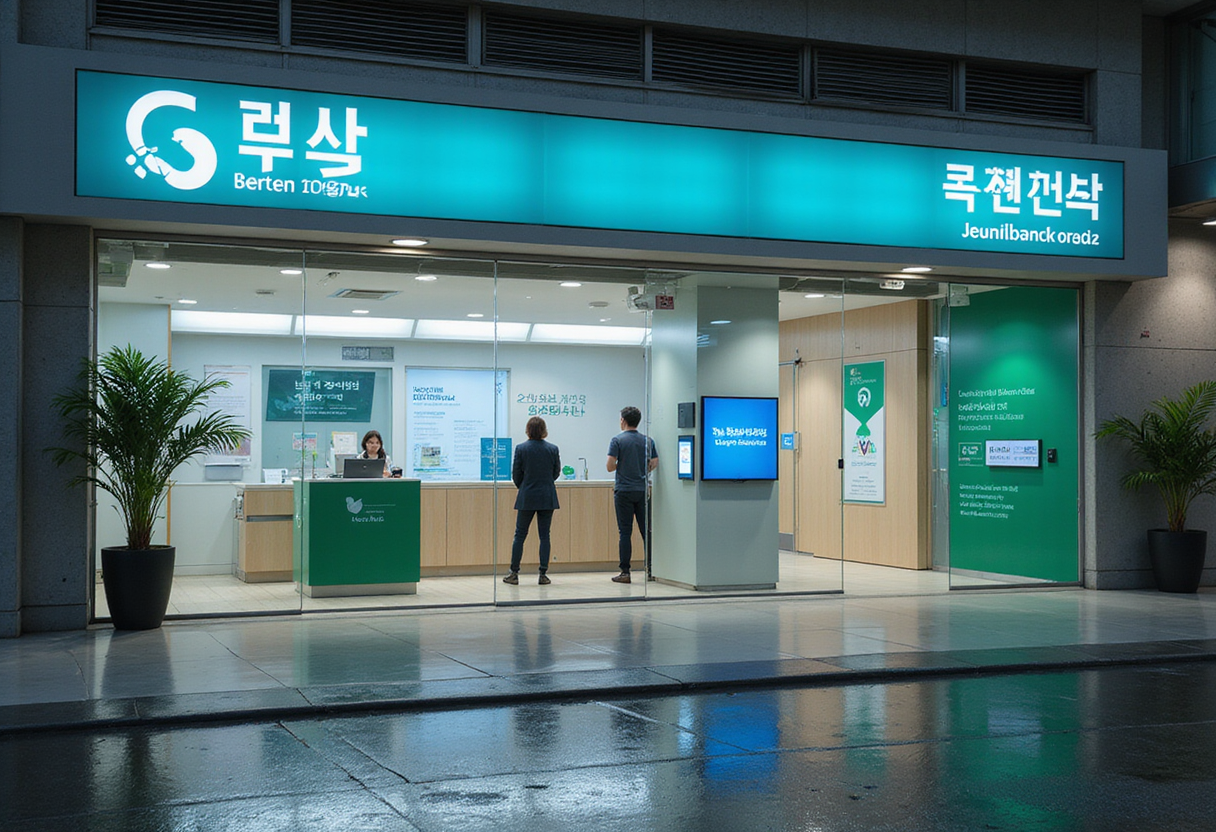
Jeonbuk Bank, a JB Financial Group unit, is offering won loans backed by bitcoin to corporates, with collateral held by a registered custodian and recovery via court-ordered sale.
Outputs
Jeonbuk Bank is the first South Korean bank to offer won-denominated loans backed by bitcoin, per Edaily reporting from October 12, 2026.
The product is limited to corporate working-capital borrowers; bitcoin is the only eligible collateral.
Collateral is held by a custodian registered under Korea's Act on the Reporting of Specific Financial Information; the bank never takes possession of the coins.
JPMorgan Chase launched comparable bitcoin-backed institutional loans in March; Sygnum Bank in Switzerland offers similar credit.
The loan is the first product from President Park Chun-won's 'Crypto Bank' initiative; an all-in-one fiat-plus-digital-asset wallet is in preparation.
Jeonbuk Bank has become the first bank in South Korea to offer won-denominated loans collateralized by bitcoin, according to exclusive reporting published Monday by the Korean newspaper Edaily. The product, launched through the regional lender that operates as a subsidiary of JB Financial Group, marks the first time a Korean bank has extended credit against a digital asset rather than fiat or conventional securities.
The initial scope is deliberately narrow. The loans are available only to corporate customers raising working capital, and bitcoin is the sole eligible collateral. The bank told Edaily it may broaden the service depending on regulatory changes and market demand, which places the product's growth trajectory squarely within the policy timetable in Seoul rather than in the bank's own commercial discretion.
How does the structure work?
The bank designed the product to avoid touching the coins at any point. Jeonbuk Bank will neither own nor control the bitcoin pledged as collateral. Instead, a specialized custodian holds the assets, and eligibility for that custody role is limited to virtual asset service providers registered under Korea's Act on the Reporting of Specific Financial Information — the same framework that governs the country's licensed exchanges.
Default mechanics follow the same separation. If a borrower fails to repay, the bank does not take possession of the coins. It liquidates them through enforcement procedures such as a court-ordered sale and recovers the loan from the proceeds. The arrangement keeps the lender outside the direct digital asset holding chain while preserving standard recovery channels.
"This loan is an example of designing a risk management and recovery structure that allows us to utilize existing bank lending and collateral management systems without directly holding virtual assets," said Jeong Sang-hoon, executive vice president of the bank's digital division.
Why bitcoin, and how is it valued?
The bank said it selected bitcoin because of its market capitalization and trading volume, the largest of any digital asset, factors that support liquidity in a forced sale. It added that its internal stress tests showed bitcoin performed adequately as collateral even during sharp price declines — a claim practitioners will read as the bank having sized loan-to-value ratios against historical drawdowns.
For valuation, Jeonbuk Bank does not rely on a single venue. It uses an index built on a weighted average of prices across multiple global exchanges, reducing exposure to dislocations on any one platform — a relevant safeguard in a market where Korean exchange pricing has historically diverged from global benchmarks.
The bank is not entering unfamiliar territory. It is the only regional Korean bank providing real-name verified accounts to cryptocurrency exchanges, a compliance function it already operates under the same financial-information reporting regime. The loan is the first concrete product to emerge from the "Crypto Bank" strategy laid out by bank President Park Chun-won, and the lender is preparing an "all-in-one wallet" that combines fiat accounts with digital asset wallets.
Comparable credit lines already exist outside Korea. JPMorgan Chase began offering bitcoin-backed loans to institutional clients in March, and Switzerland's Sygnum Bank provides similar products, meaning Korean corporates now have domestic access to a structure their counterparts in New York and Zurich have used for months.
What does this change for Korean corporates?
For companies holding bitcoin on their balance sheets, the product converts a dormant asset into working capital without triggering a taxable disposal — the loan is debt, not a sale. For the banking sector, it sets a compliance template: a registered custodian, an indexed valuation method and court-supervised liquidation, all inside existing prudential rails.
The expansion question now sits with regulators. Jeonbuk Bank has tied any widening of the service — to retail customers, or to collateral beyond bitcoin — to future regulatory changes, which makes Korea's next policy moves on virtual asset lending the variable to watch.
via en.edaily.co.kr (Original)
More from Nathan Brooks
Show full bio
Market editor covering money, funding and market shifts around crypto and web3 industry at Mempool Brief.
489 articles